It is dusk, and a corner of the room has decided to stay dark. Not neglected, just unlit: the kind of dark a house keeps on purpose, the way it keeps a pantry or a stair landing. Then a match, and the dark gives up a few feet of ground. This is the territory Hearthlight was built for, the opposite of a room engineered to be evenly bright from corner to corner. It is a hand-built lantern, oak and old glass, standing on a low wood plinth instead of hanging from anywhere, and it has never tried to light more than it actually can.
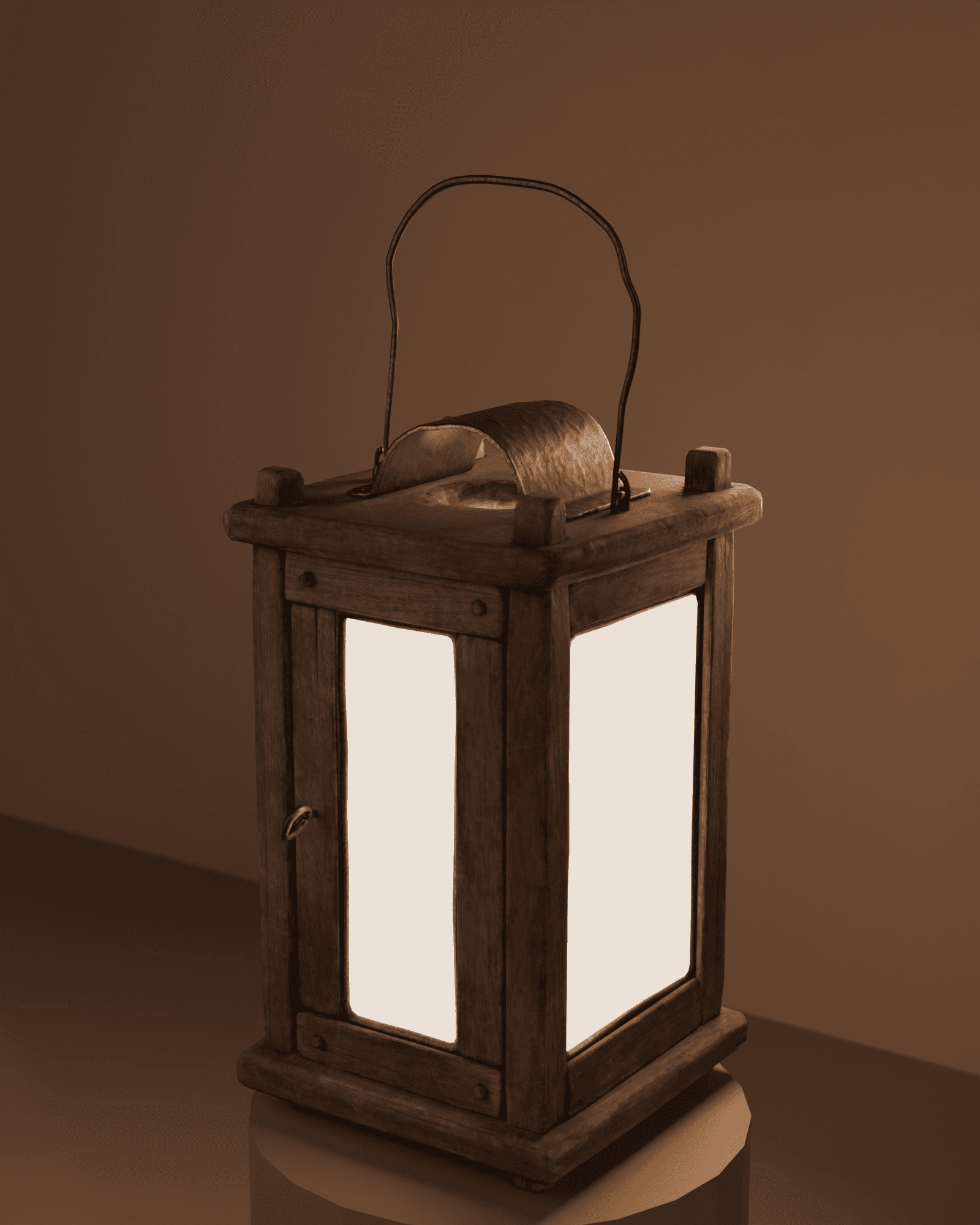
No engineered lumens here, no color-temperature spec sheet taped to a housing. Inside the glass, a single warm point does what a candle has always done: it pools close and falls off fast, and it turns the nearest patch of plaster the color of a low sun. Everywhere the glow does not reach stays honestly dark, and that honesty is the whole design brief. A fixture that tried to flatter every surface in the room would be lying about what a flame actually does.
Nothing about the object itself is trying to look new. Up close, the joinery shows its pegs. The glass has the faint waver of an old pane, the kind that bends a reflection slightly instead of holding it flat. The iron handle has gone matte with handling, the way a tool gets handled rather than displayed. None of this warmth is a filter laid over a clean render afterward. It is the material reading true under a light that happens to favor it, because warm light is generous to worn things in a way cold light rarely is.
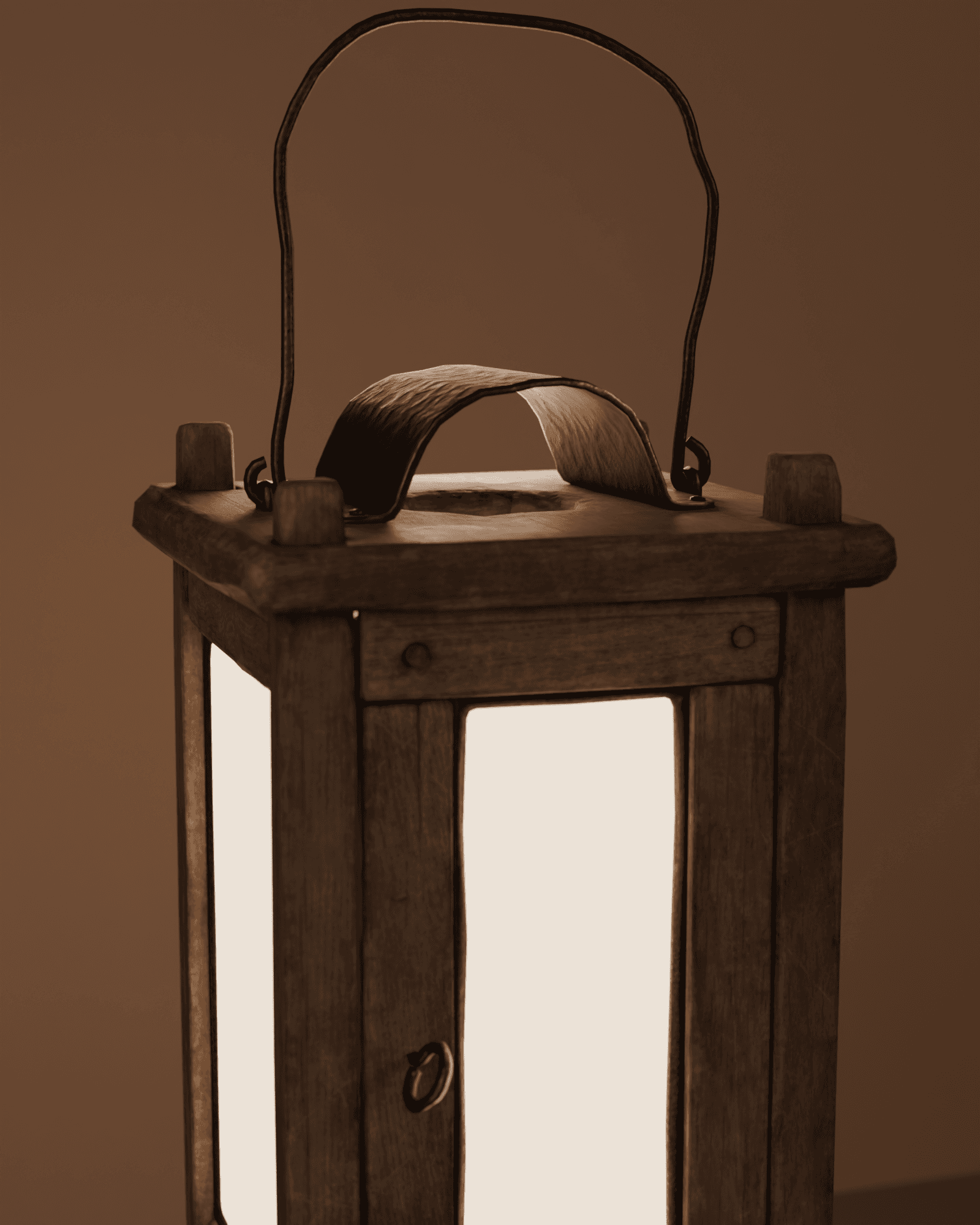
Set the lantern down anywhere in a room and it does not ask the room to change. There is no dimmer to argue with, no color temperature to match to the rest of the fixtures. It simply keeps a small, local, honest patch of warmth, and everything past the reach of that patch is left to its own dark, the way a house actually behaves after the sun goes down, long before anyone ever standardized how a room is supposed to be lit.
Every surface here can be accounted for. The lantern is a real CC0 asset (Wooden Lantern 01, Poly Haven), staged and lit with a real Cycles render: the glow is the glass's own emission, not a glow added afterward in a compositor, and the plaster wall is a procedural material, built from the same honesty this whole territory asks for, not a photograph standing in for one. There is no maker behind it, no store, no client. Just a quiet corner, and a light that was never meant to fill the whole room.